The Man Behind James J. Hill Days: A Look at James J. Hill and His Lasting Impact on Wayzata
Every September, downtown Wayzata comes alive for James J. Hill Days. Lake Street fills with families, live music, food, shopping, a parade and traditions that have made the celebration one of the most anticipated weekends of the year.
But who exactly was James J. Hill—and why does one of Wayzata’s biggest celebrations carry his name?
The answer takes us back more than 150 years, to a time when railroads were transforming Minnesota and a small lakeside village was beginning to become the Wayzata we recognize today.
From Canada to St. Paul
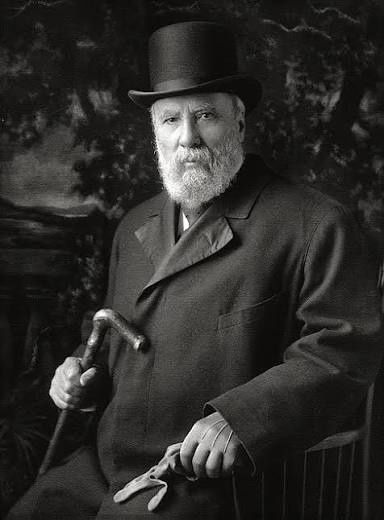
James Jerome Hill was born in Ontario, Canada, on September 16, 1838. After losing his father as a teenager, Hill went to work at an early age. In 1856, at just 17 years old, he arrived in St. Paul and found work as a shipping clerk along the Mississippi River.
Transportation would ultimately become his life's work.
Hill spent roughly two decades learning the shipping business, working with steamboats, freight and trade routes throughout the region. In 1878, Hill and a group of investors purchased the struggling St. Paul & Pacific Railroad. That investment would eventually become the foundation of one of the most influential railroad systems in American history.
Building the Great Northern Railway
Rather than attempting to build an enormous railroad all at once, Hill became known for expanding methodically. He improved existing tracks, established industries along his routes and reinvested profits into the railroad before continuing west.
The system eventually became the Great Northern Railway, stretching from St. Paul across the northern United States to the Pacific Northwest.
By January 1893, the Great Northern had completed its transcontinental route to Washington state. Hill's enormous influence over transportation and development across the Northwest earned him a nickname that would follow him for the rest of his life:
“The Empire Builder.”
The railroad did far more than move passengers. It transported Minnesota wheat and other goods to markets, encouraged immigration and settlement along its routes and helped connect growing communities throughout Minnesota, North Dakota, Montana and the Pacific Northwest.
And one of those communities was Wayzata.
The Railroad Comes to Wayzata
Wayzata's relationship with the railroad actually began before Hill took control of the system.
On August 24, 1867, the first train arrived in Wayzata on the St. Paul & Pacific line. The arrival of rail service was transformational for the small community on Lake Minnetonka.
Suddenly, residents of Minneapolis and St. Paul could travel much more easily to the lake. Passengers arriving in Wayzata could board steamships that carried them to resorts, communities and summer homes around Lake Minnetonka.
The railroad helped establish Wayzata as a gateway to the lake and contributed to the area's rise as a popular summer destination.
By the late 1800s, Lake Minnetonka was entering its grand resort era. Visitors traveled from the Twin Cities and beyond to escape to the lake, staying at elaborate hotels and summer estates scattered along its shoreline.
In many ways, the connection between Wayzata and Minneapolis that we take for granted today began with those early trains.
James J. Hill and Wayzata Didn't Always Get Along
Hill's place in Wayzata history also comes with one particularly interesting chapter.
As train traffic increased, not everyone in Wayzata was thrilled with the railroad running directly along the lakefront. Trains blocked views of Lake Minnetonka while bringing smoke, noise and flying cinders through the center of town.
After Wayzata incorporated in 1883, village leaders ordered the railroad tracks moved away from Lake Street and rerouted north of town.
Hill had other ideas.
According to the Lake Minnetonka Historical Society, Hill initially ignored the village's order. After the disagreement went to court, the railroad station at the foot of Broadway was demolished and another station was constructed nearly a mile east of town. The tracks were moved—but instead of being moved north, they were positioned even closer to the lake.
It was an early example of the sometimes complicated relationship between a growing community and the enormously powerful railroad running through it.
Eventually, however, the railroad and Wayzata would become inseparable pieces of one another's history.
A Man Who Helped Shape Minnesota
Hill's influence extended far beyond Wayzata.
His railroad empire helped shape the economic development of the Upper Midwest and Northwest. He became one of the wealthiest and most powerful businessmen of America's Gilded Age, working alongside figures such as financier J.P. Morgan.
His career was not without controversy. Railroad wage reductions contributed to a major Great Northern labor strike in the 1890s, and Hill's attempts to consolidate several major railroads through the Northern Securities Company ultimately attracted the attention of President Theodore Roosevelt's administration. The U.S. Supreme Court ordered Northern Securities dissolved in 1904 under federal antitrust law.
Hill nevertheless remained enormously influential.
His massive 36,000-square-foot mansion on Summit Avenue in St. Paul, completed in 1891, still stands today. Now operated by the Minnesota Historical Society, the James J. Hill House offers visitors a glimpse into the extraordinary wealth and ambition of Minnesota's Gilded Age.
Hill died there on May 29, 1916, at the age of 77.
His Legacy Is Still All Around Us
More than a century after Hill's death, pieces of his railroad legacy remain surprisingly familiar.
Much of the former Great Northern system ultimately became part of what is now BNSF Railway, and Amtrak's famous Empire Builder passenger train still travels between Chicago and the Pacific Northwest—a direct reference to Hill's historic nickname.
Here in Wayzata, his legacy is even more visible.
The railroad tracks still hug the shoreline. The historic Wayzata Depot remains one of the community's most recognizable landmarks. And each September, thousands of people gather downtown for a celebration bearing the name of the railroad magnate whose story became intertwined with that of the city.
From Railroad Town to Lake Minnetonka Destination
Wayzata has changed dramatically since the first train arrived in 1867.
The grand resort hotels of Lake Minnetonka's earliest tourism era have largely disappeared. In their place are the restaurants, boutiques, homes, parks and gathering places that make downtown Wayzata what it is today.
Yet the basic attraction remains remarkably similar.
More than a century ago, people boarded trains from Minneapolis and St. Paul to spend a summer afternoon or weekend along the shores of Lake Minnetonka.
Today, people continue coming to Wayzata for many of the same reasons: the lake, the community and the unmistakable charm of life along the water.
James J. Hill Days is a celebration of that history—and a reminder that the railroad running alongside Lake Street isn't simply part of the scenery.
It's part of the story of how Wayzata became Wayzata.